The Cheating Paradox: Why Outsourcing Homework is a Long-term Career Risk


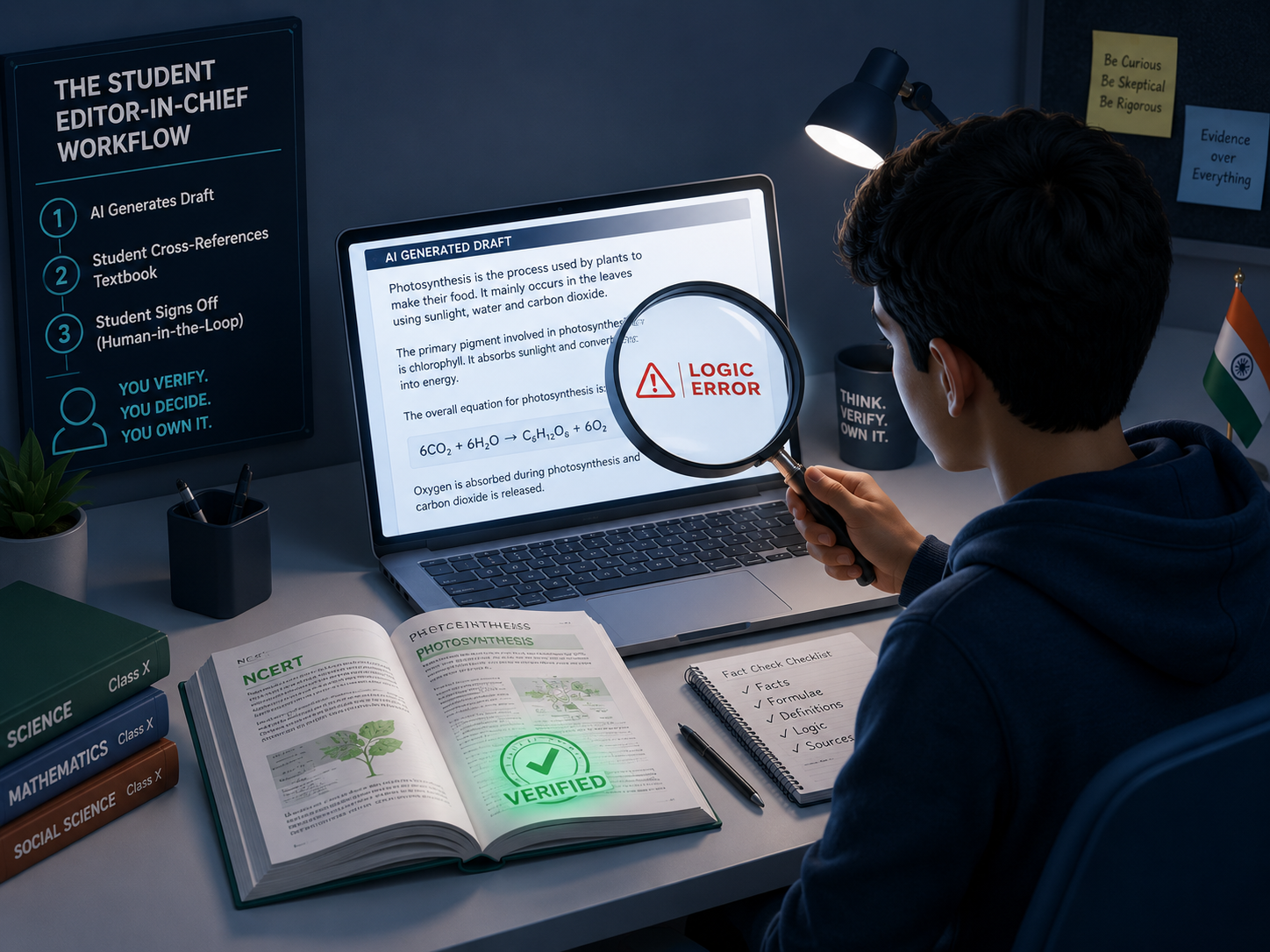
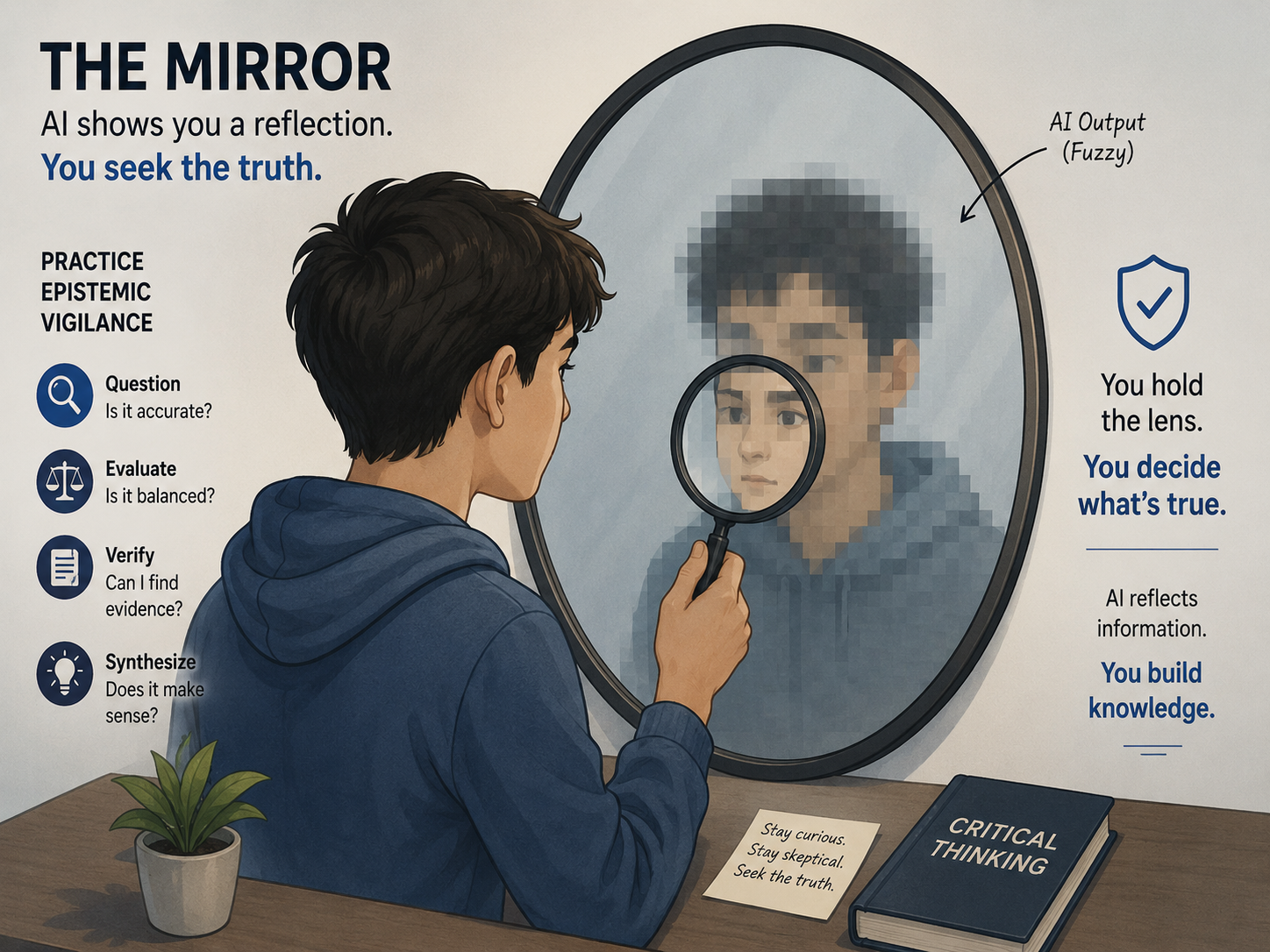
In our first two entries, we discussed the Search Engine Fallacy and the need for Epistemic Vigilance. Today, we address the “elephant in the room” for every parent and educator: Academic Integrity.
There is a growing temptation for students in Classes 8–10 to view AI as a “magic wand” that can finish a 500-word essay or a complex math worksheet in seconds. At EduMark AI, we call this the Cheating Paradox: The more a student uses AI to “save time” on their homework today, the more they jeopardize their time—and their relevance—in the career landscape of tomorrow.
The Neural Feedback Loop: Learning is a Physical Act
Many parents fear AI because it makes cheating “easy.” However, the real danger isn’t just a moral one; it is biological.
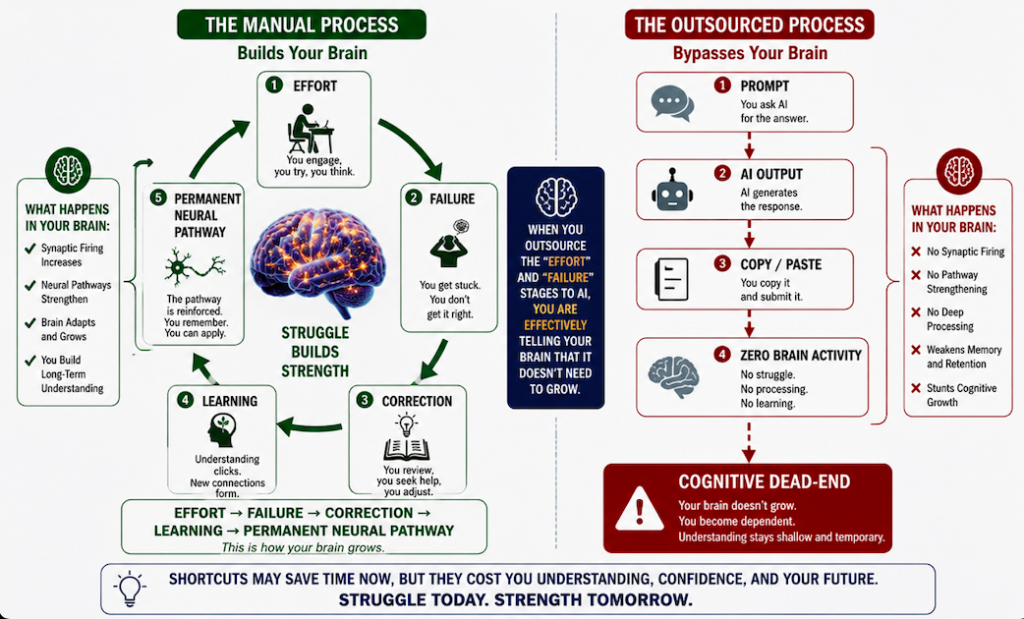
Learning is not the act of possessing an answer; it is the physical process of building neural pathways. When a student struggles with a difficult concept in Physics or tries to structure a compelling argument in English, their brain is undergoing “synaptic pruning” and strengthening.
The Manual Process: Effort -> Failure -> Correction -> Learning -> Permanent Neural Pathway.
The Outsourced Process: Prompt -> AI Output -> Copy/Paste -> Zero Brain Activity.
When you outsource the “Effort” and “Failure” stages to an AI, you are effectively telling your brain that it doesn’t need to grow.
Why the 2026 Board Exams Will Penalize "Output-Only" Students
As we have noted, the Class 10 Board Exams 2026 are pivoting toward 50% Competency-Based Questions (CBQs). These exams are designed specifically to break the “rote-learning” and “shortcut” culture.
A student who uses AI to write their homework might submit “perfect” assignments all year, but they will face a structural collapse during the actual exam. Why? Because CBQs require Mental Agility—the ability to apply a learned principle to a brand-new, unseen scenario.
If the student hasn’t built the “thinking muscle” through the grind of daily homework, they will lack the cognitive stamina to navigate a three-hour paper that demands deep logic rather than just “the right answer.”
Career Risk: The 2030 Talent Gap
In the professional world your child will enter by 2030, “content generation” will be a low-value commodity. AI will be able to write reports, code basic scripts, and generate marketing copy.
The high-value roles will be reserved for “Human-in-the-Loop” Strategic Thinkers. If a student spends their formative years (Classes 8–10) outsourcing their logic to a machine, they are entering the job market with the skills of a 2024 junior assistant, while the market is looking for 2030 leaders.
Digital Street-Smartness Tip: > Using AI to explain a concept you don’t understand is leveraging technology. Using AI to write the assignment for you is outsourcing your future.
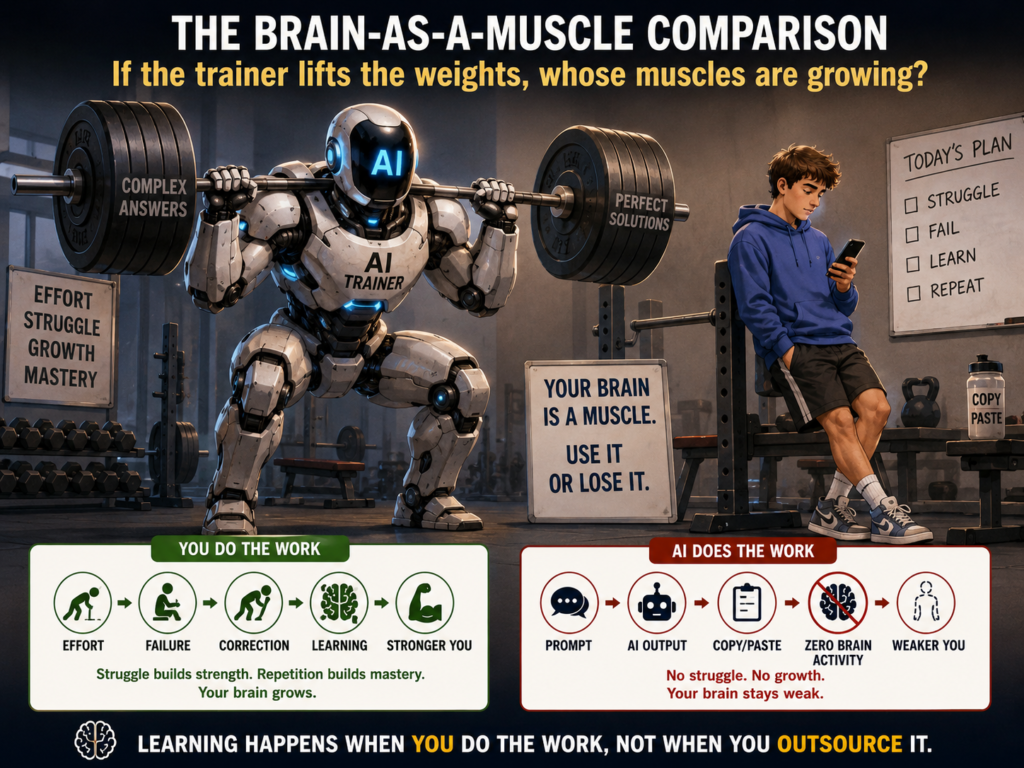
The "Trainer" Analogy: Who is Getting Stronger?
To understand the Cheating Paradox, we need to look at physical growth as a metaphor for intellectual growth.
The “Thinking Step” for the Student:
“If a calculator does your math, your fingers get fast, but your logic stays slow. If a trainer lifts your weights at the gym, the trainer gets stronger, while your own muscles stay the same. Apply this to your brain and AI: If the machine does the thinking, who is actually becoming ‘smarter’—you, or the software?”
Moving Toward "Think-First" Integrity
At EduMark AI, we believe in a “Human-First” pedagogy. We don’t tell students not to use AI; we teach them to use it as a Socratic Tutor.
- Wrong Way: “Write an essay on the causes of the French Revolution.”
- Think-First Way: “Here is my outline for an essay on the French Revolution. Can you point out any logical gaps in my argument so I can fix them?”
This subtle shift ensures that the student remains the “Lead Architect” of their own education.
Is Your Child Building "AI-Resistant" Skills?
The transition to the 2026 exam pattern and the AI-driven economy is the biggest shift in Indian education in 30 years. Don’t let your child fall into the “Cheating Paradox.”
Ensure they are building the cognitive architecture required for long-term success, not just a short-term grade.
Schedule a Free 15-Minute “AI Safety & Logic” Consultation.
Let’s discuss how to turn AI into a mentor that builds your child’s brain instead of a shortcut that bypasses it.