The Search Engine Fallacy: Why 72% of Students are Using AI Wrong

The current educational landscape in India is undergoing a structural transformation that most families are not yet prepared for. As we head toward the 2026–2027 academic year, the integration of Artificial Intelligence (AI) has reached a historic inflection point. However, recent research reveals a startling "Intellectual Misalignment" that could jeopardize the cognitive development of teenagers in Classes 8 through 10.
Data from the Bharat Survey for EdTech 2025 indicates that while 96% of children use generative AI multiple times a week, a staggering 72% of these students fundamentally misunderstand how the technology operates. They are falling victim to the Search Engine Fallacy: treating a logic-processing tool as if it were a simple fact-finder like Google.
At EduMark AI, our mission is to ensure that AI becomes a "thinking tool" rather than a "cheating tool." For parents, understanding this fallacy is the first step in protecting your child's intellectual autonomy.
Search vs. Generative AI: Understanding the Logic Gap
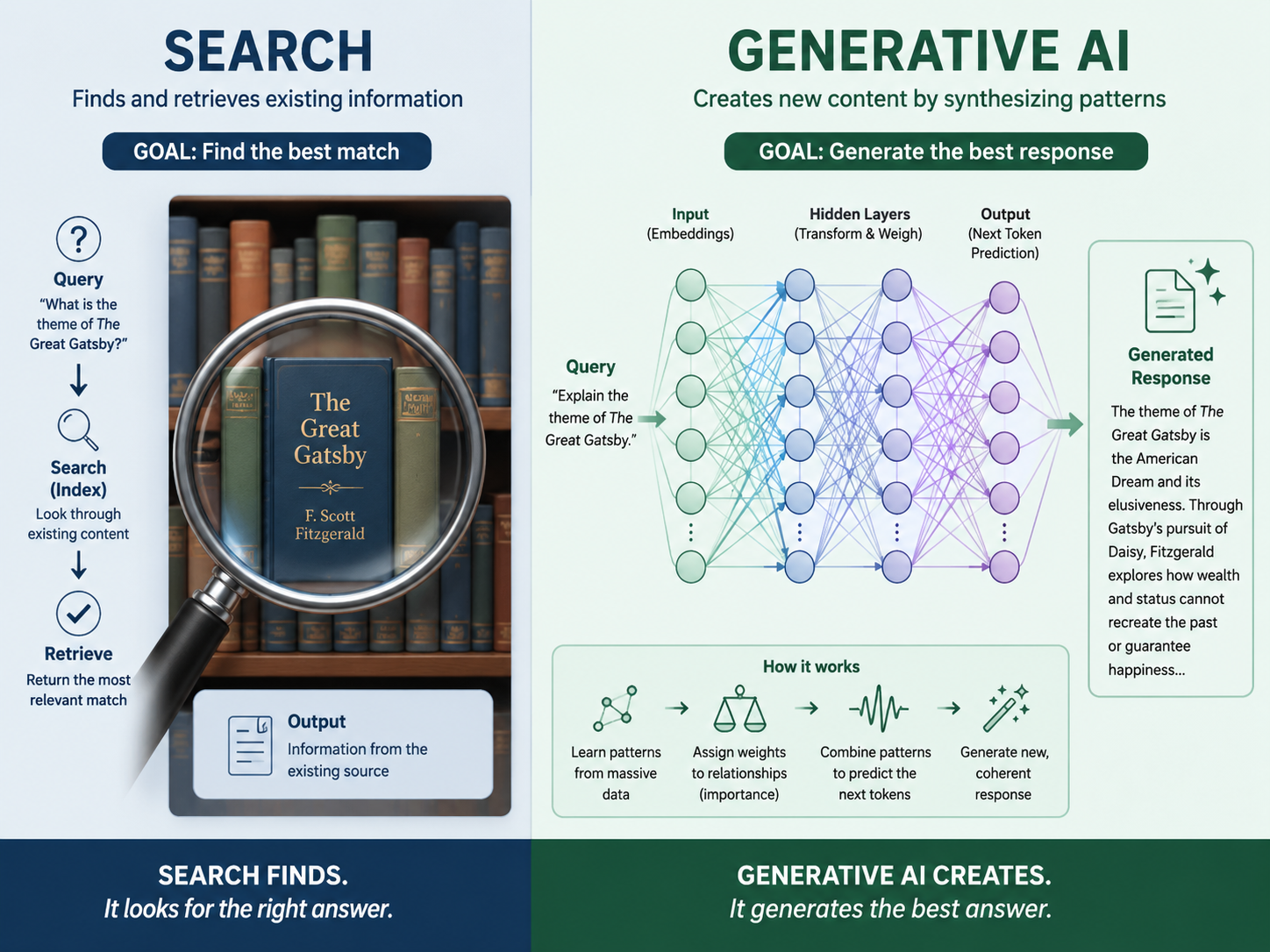
To understand why 72% of students are using AI incorrectly, we must first define the difference between Search and
Generation.Search Engines (The Librarian): A search engine is like a massive, digitized library. When a student types a query, the engine retrieves existing data that has been verified and indexed. Its job is to find "where" information lives.
Generative AI (The Pattern-Predictor): Generative AI does not "know" facts in the traditional sense. It operates on probabilistic word prediction. It analyzes massive datasets to identify patterns and then predicts the most likely sequence of words to follow a prompt.
The Mentor’s Analogy: If a Search Engine is a librarian who hands you a map, Generative AI is a chef who has memorized a billion recipes and is trying to cook a new dish based on what you say you want. If you ask the chef for a map, he might try to "cook" one that looks real but leads nowhere.
The Cognitive Risk: Outsourcing Thought and Hallucinations
The 2026 Shift: Why Rote-AI Prompts Will Fail in Exams
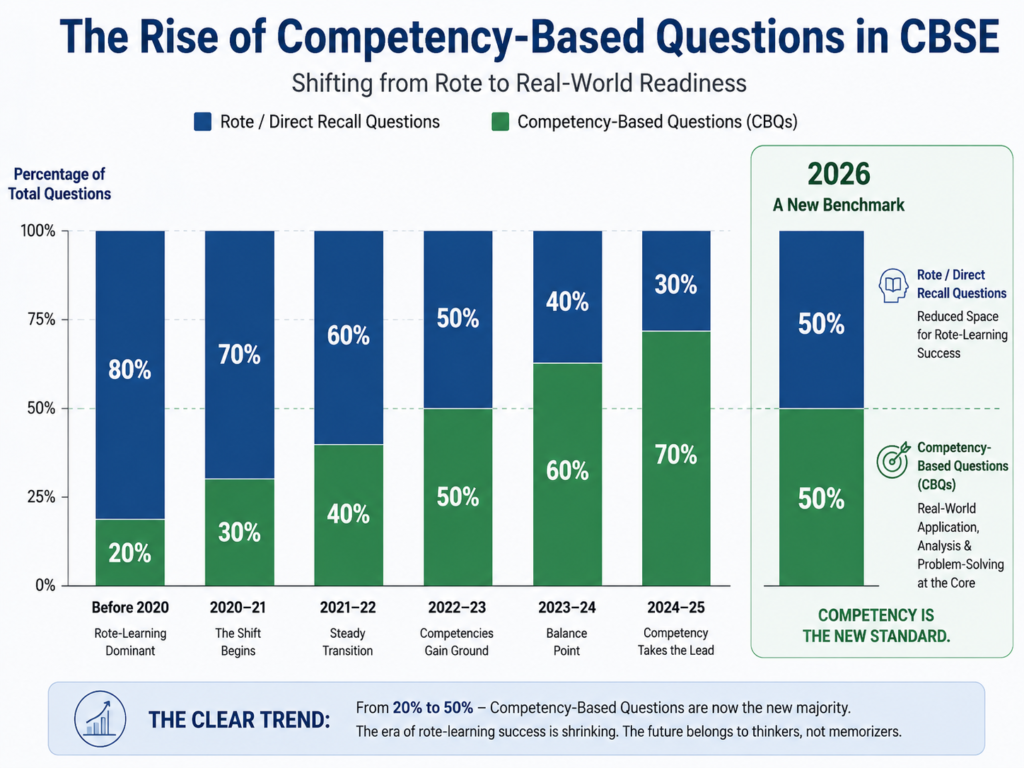
The Central Board of Secondary Education (CBSE) is already ahead of this trend. By the 2026 cohort, 50% of Board Examination questions will be Competency-Based (CBQs).
These questions take the form of complex case studies and real-world application tasks that cannot be answered through rote memorization or simple "fact-finding".
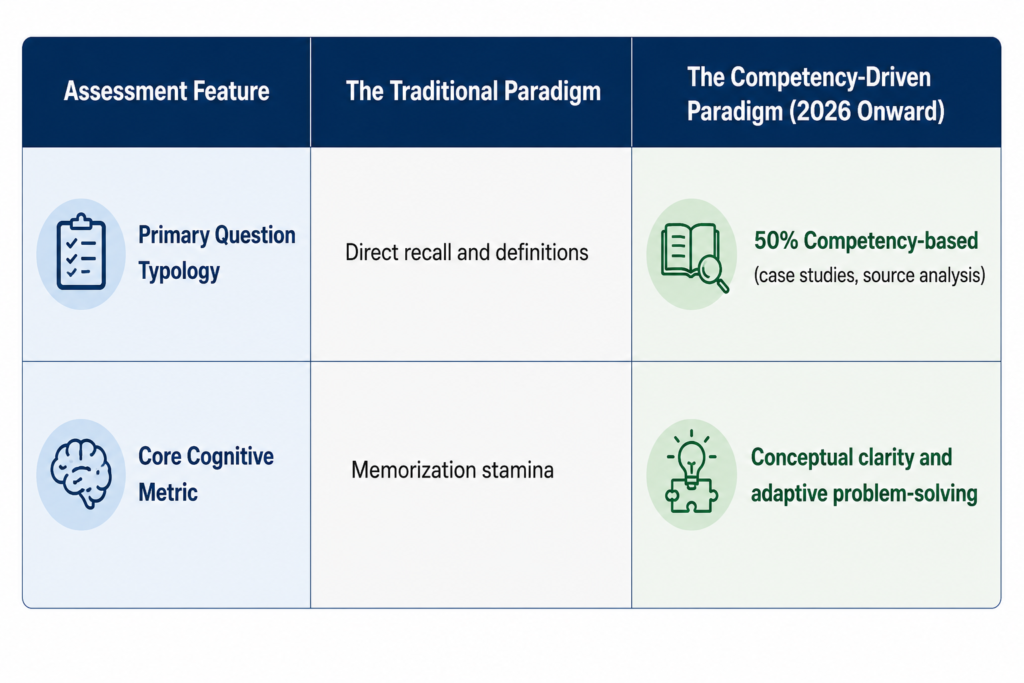
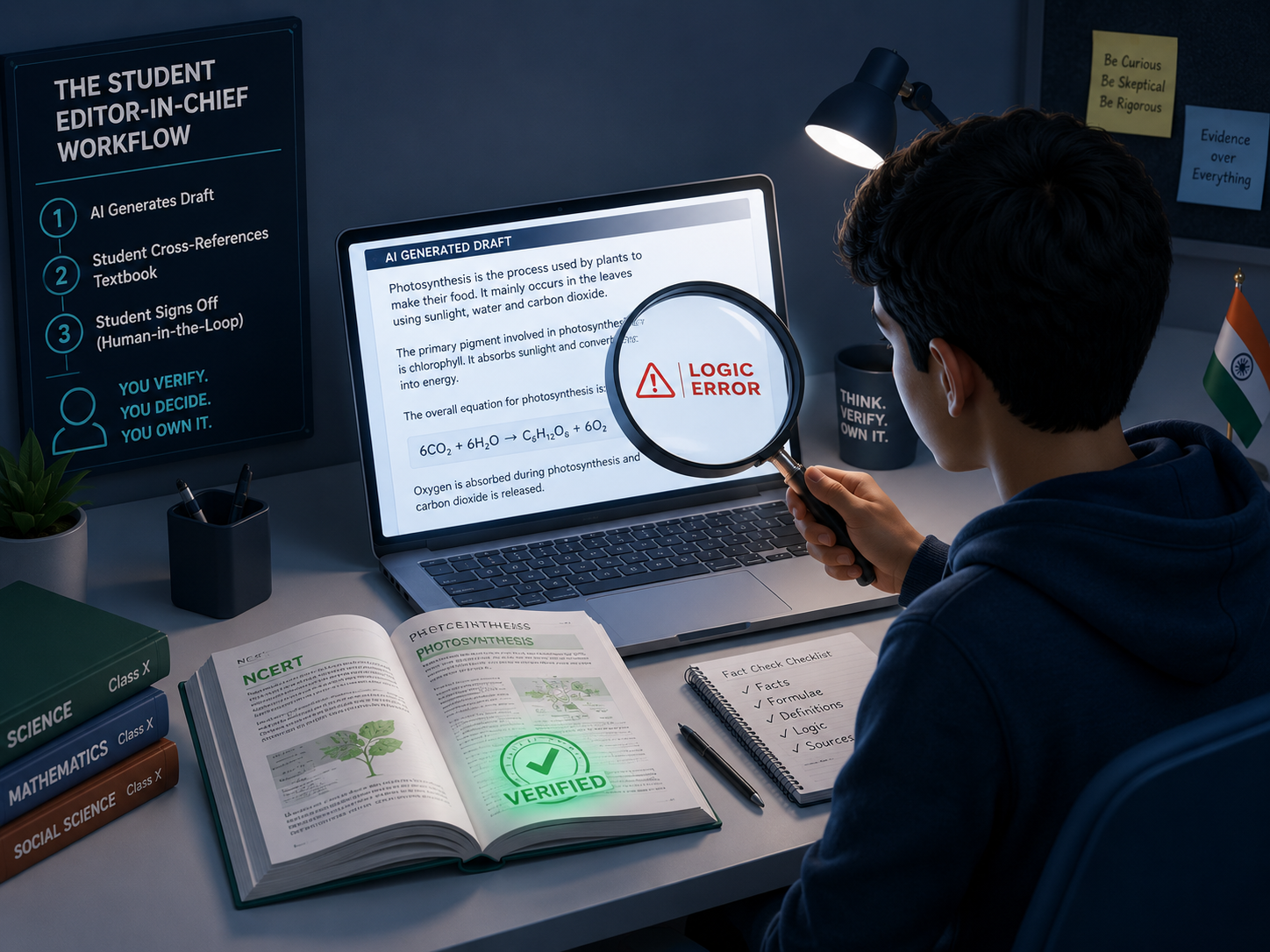
Students who rely on AI to give them "the answer" will find themselves completely unprepared for an exam designed to test how they arrived at that answer.
The Solution: The "Think-First" Approach
At EduMark AI, we teach students that Computational Thinking (CT) is the "intellectual backbone" for AI literacy. Before a student even touches an AI tool, they must apply the four pillars of CT:
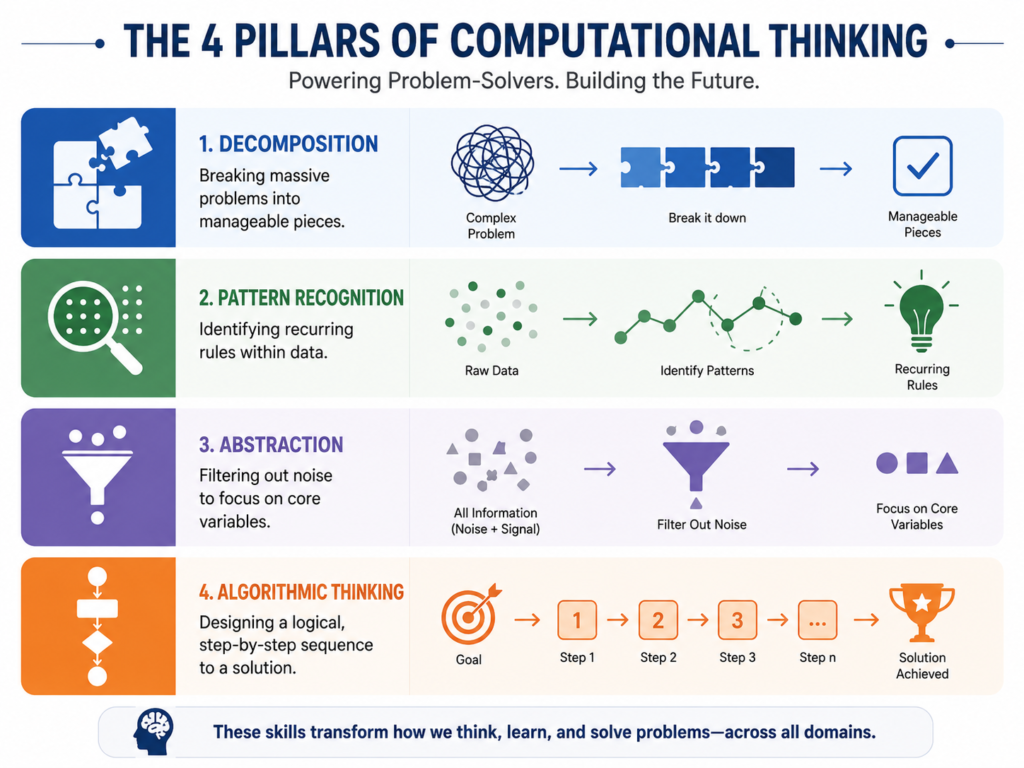
1. Decomposition: Breaking massive problems into manageable pieces.
2. Pattern Recognition: Identifying recurring rules within data.
3. Abstraction: Filtering out noise to focus on core variables.
4. Algorithmic Thinking: Designing a logical, step-by-step sequence to a solution.
By mastering these, the student remains the "human-in-the-loop". They use AI to accelerate their output, not to replace their input.
Ethical Prompting: The P.A.C.E. Framework
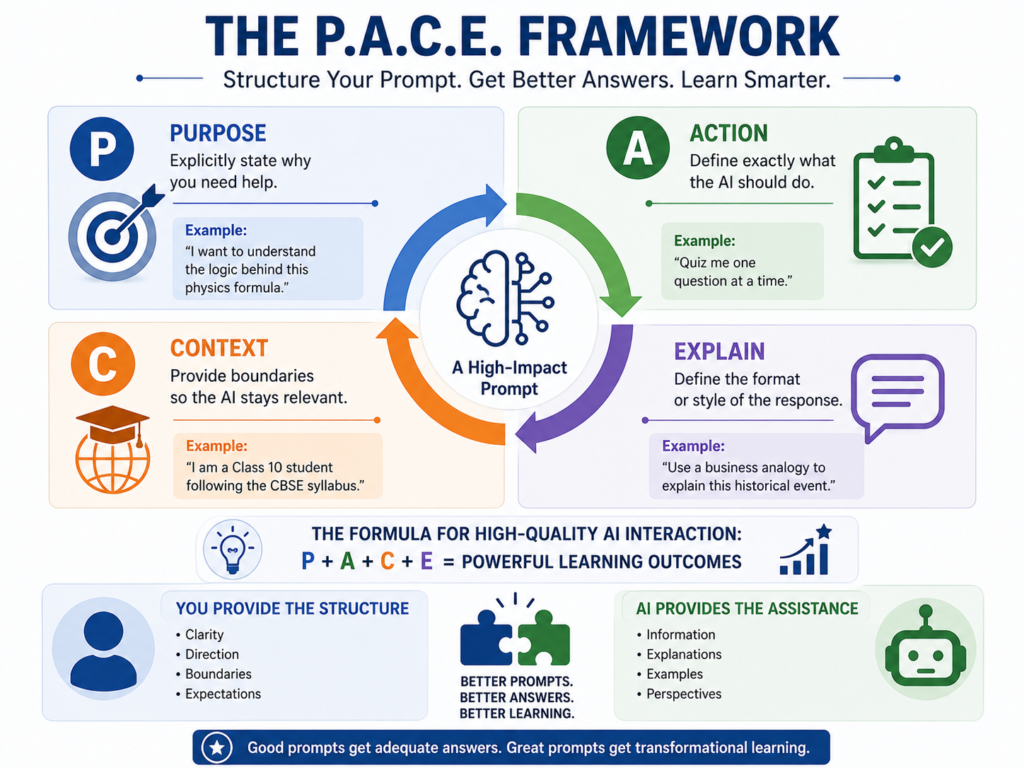
To move away from the Search Engine Fallacy, we train students in Ethical Prompt Engineering using the P.A.C.E. Framework. This transforms the AI from an "answer key" into a Socratic Tutor.
P - Purpose: Explicitly state why you need help (e.g., "I want to understand the logic behind this physics formula").
A - Action: Define exactly what the AI should do (e.g., "Quiz me one question at a time").
C - Context: Provide boundaries (e.g., "I am a Class 10 student following the CBSE syllabus").
E - Explain: Define the format (e.g., "Use a business analogy to explain this historical event").
The Thinking Step: A Reflection for the Student
As we navigate this transition, we must remember that technology itself does not create a permanent advantage; it is the disciplined, critical thinkers who leverage that technology who will shape the future.
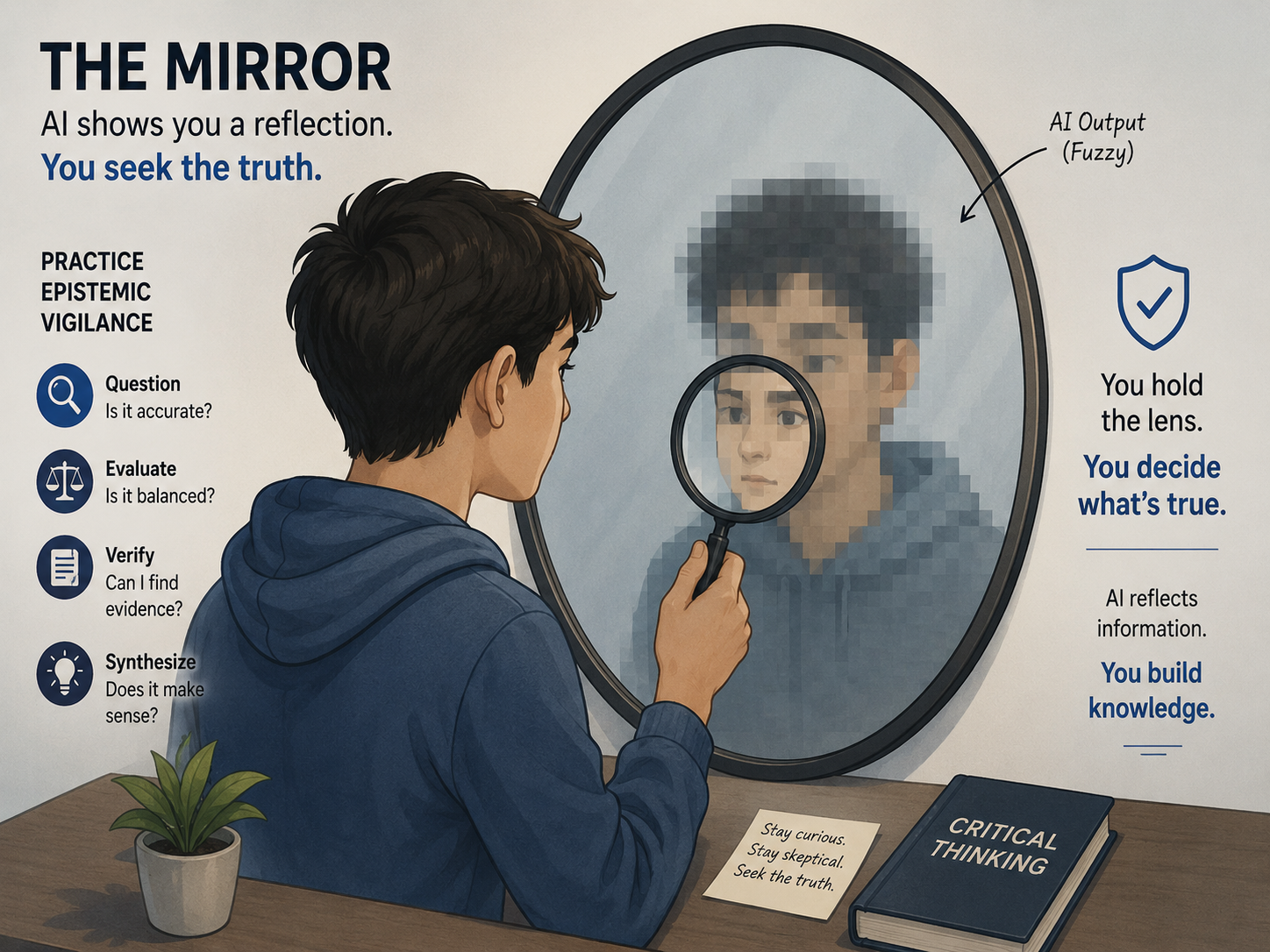
Reflect on this: “If Google is a library, and AI is a mirror, what happens to your own thoughts when the mirror is distorted?” If you only see what the AI reflects back to you, are you still the one thinking? Or are you just repeating a pattern you don't understand?
Protecting Your Child’s Cognitive Future
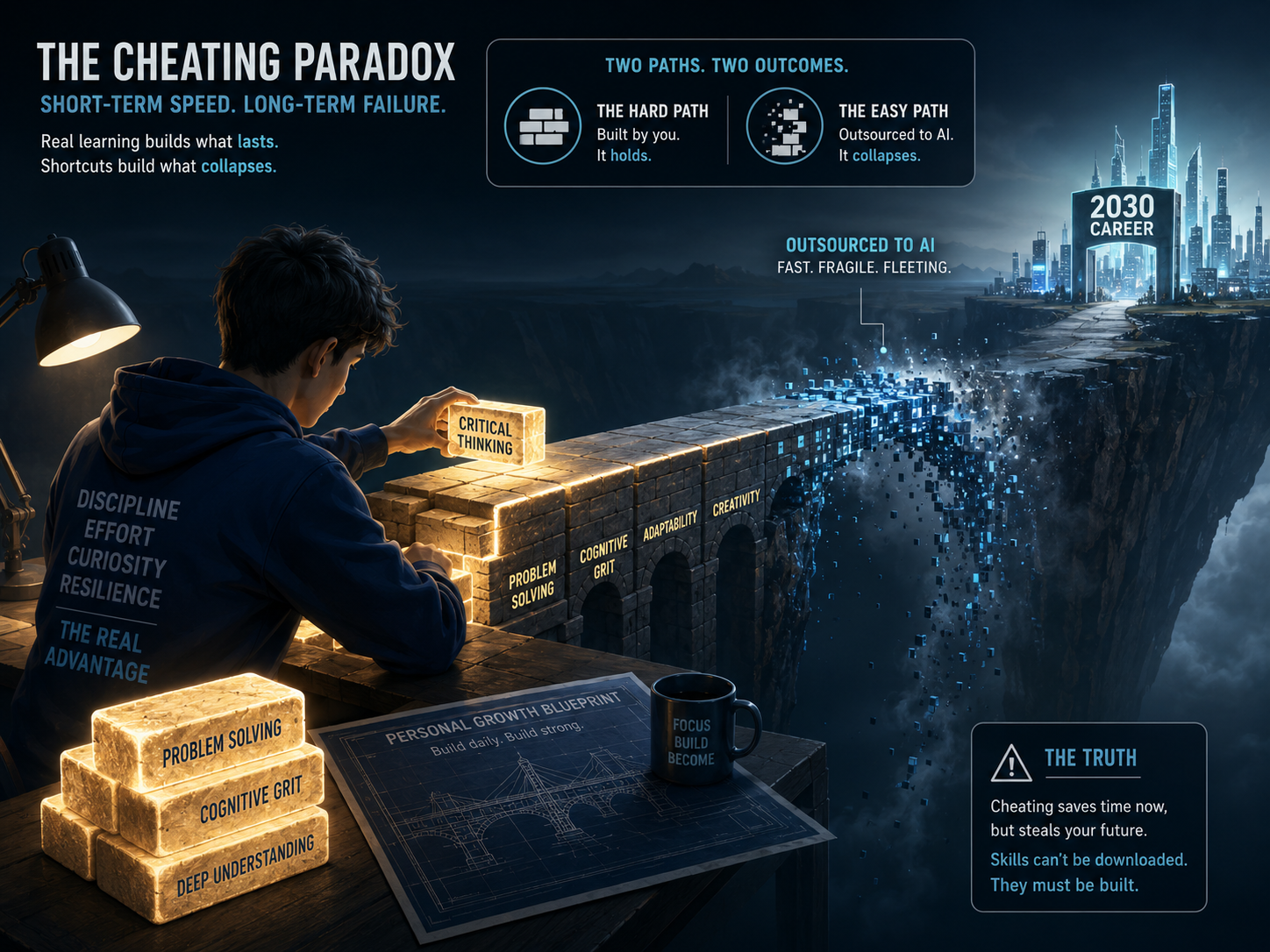
The era of securing success through rote memorization and mass-coaching centers has permanently concluded. The 2030 job market will belong to those who possess "Digital Street-Smartness"—the ability to use AI responsibly and effectively without losing their human edge.
Navigating the complexities of the new dual board examination system and the ethical integration of AI can be overwhelming for any family.
Schedule a Free 15-Minute "AI Safety & Logic" Consultation today. Let’s discuss your child’s specific academic challenges and ensure they are building the cognitive architecture required for the 2030 paradigm.